
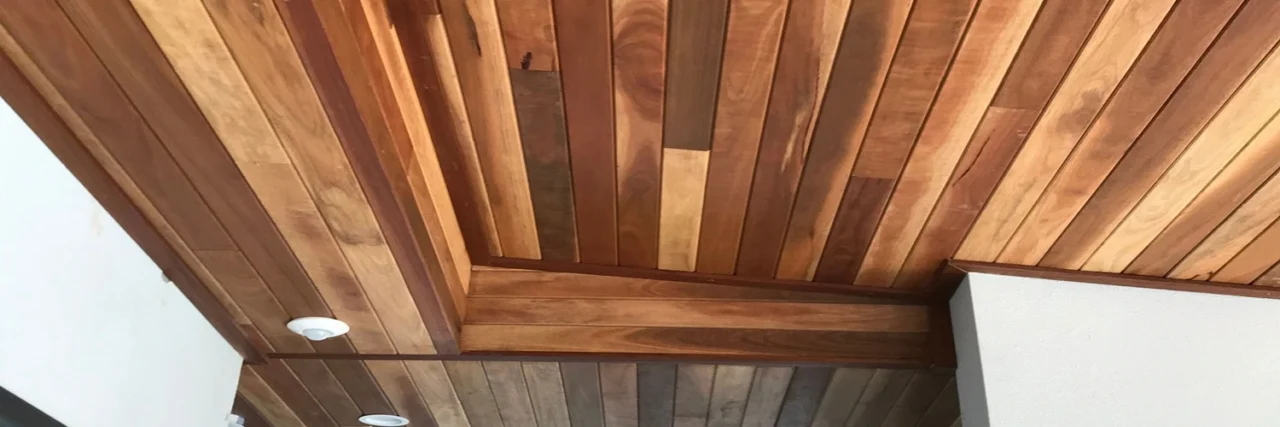
Timber ceilings are a popular feature in South African homes. Their natural appearance brings warmth and character to living rooms, bedrooms and entertainment areas. However, while timber is an attractive ceiling material, many homeowners overlook what happens above the boards.
Do timber ceilings need insulation? In most homes, the answer is yes. Timber provides some natural resistance to heat transfer, but a timber ceiling alone is generally not enough to provide effective thermal insulation throughout the year.
Without adequate insulation, heat can enter through the roof during summer and escape during winter. Installing suitable ceiling insulation helps improve indoor comfort, reduce temperature fluctuations and limit the energy required for heating and cooling.
This guide explains why insulation matters, which materials are suitable and what to consider when insulating a timber ceiling.
Why Timber Ceilings Need Insulation
Timber is a relatively poor conductor of heat compared with materials such as steel or aluminium. This means it offers some natural insulating properties.
However, most timber ceiling boards are relatively thin and cannot provide the thermal resistance required from a properly insulated roof assembly.
In South Africa, roofing materials can become extremely hot during summer, particularly metal roofs exposed to direct sunlight. This heat transfers into the roof space and can eventually increase the temperature of the rooms below.
During winter, the opposite occurs. Warm indoor air transfers heat towards the colder roof space, causing rooms to lose heat.
Installing insulation above a timber ceiling creates an additional thermal barrier that reduces heat transfer between the living area and the roof.
The result is a more consistent and comfortable indoor environment.
Benefits of Insulating a Timber Ceiling
1. Cooler Indoor Temperatures During Summer
During hot weather, roof spaces can become considerably warmer than the rooms beneath them.
Without adequate insulation, heat from the roof can transfer through the ceiling and increase indoor temperatures.
Thermal insulation slows this process, helping living spaces remain cooler during the day.
This can be particularly beneficial in South African regions that experience prolonged summer heat.
2. Improved Warmth During Winter
Insulation works in both directions.
During winter, it helps limit heat escaping through the ceiling and roof. Rooms can retain warmth for longer, reducing the amount of additional heating needed to maintain comfortable temperatures.
This is particularly useful in areas such as Johannesburg and Pretoria, where winter nights can be cold.
3. Reduced Heating and Cooling Costs
A properly insulated ceiling can reduce the heating and cooling energy required to maintain comfortable indoor temperatures.
The actual savings depend on the building’s construction, local climate, insulation performance and household energy use.
Although insulation requires an initial investment, it can contribute to improved energy efficiency over the building’s lifetime.
4. Better Acoustic Comfort
Certain insulation materials also absorb sound energy.
Fibrous products such as glass mineral wool can help reduce sound transmission through suitable roof and ceiling constructions.
However, insulation alone will not completely soundproof a room. The effectiveness of an acoustic installation also depends on the ceiling boards, gaps, roof construction and other building components.
What Is the Best Insulation for Timber Ceilings?
Several insulation materials can be installed in suitable timber ceiling and roof assemblies.
The correct choice depends on the available roof space, thermal performance requirements, moisture conditions and installation method.
Glass Mineral Wool Insulation
Glass mineral wool is a widely used insulation material for residential ceilings.
It consists of fine glass fibres that trap air within the insulation, helping reduce heat transfer.
Its main advantages include:
- Effective thermal insulation when installed at the appropriate thickness.
- Sound absorption properties.
- Lightweight and flexible construction.
- Availability in different thicknesses and thermal resistance ratings.
- Suitability for many conventional roof-space installations.
One example is Earthwool insulation, a glass mineral wool product range used for thermal and acoustic insulation. It is manufactured with ECOSE technology and is available in different thicknesses for suitable ceiling applications.
The insulation should be selected according to the thermal performance required for the particular roof assembly.
Polyester Ceiling Insulation
Polyester ceiling insulation is another option for timber ceilings.
It is manufactured from synthetic fibres and is generally supplied in flexible blankets or rolls.
Depending on the specific product, polyester insulation can provide useful thermal resistance and sound absorption.
As with glass mineral wool, selecting the correct thickness and R-value is important.
Rigid Insulation Boards
Rigid insulation products, including certain polystyrene boards, can also form part of appropriately designed ceiling or roof assemblies.
These products provide thermal resistance in a relatively compact form and may be suitable where installation depth is restricted.
However, their fire performance, fixing methods and suitability must be assessed for the complete ceiling construction.
Rigid boards are not necessarily interchangeable with flexible ceiling insulation.
For more information about different ceiling finishes, read our guide to the pros and cons of different ceiling materials.
Where Should Insulation Be Installed Above a Timber Ceiling?
In a conventional pitched roof with an accessible ceiling void, thermal insulation is commonly installed above the ceiling, beneath the roof structure.
The installation should provide continuous insulation coverage without unnecessary gaps.
The correct arrangement depends on how the timber boards are supported, the available ceiling space and the roof construction.
It is important to consider the following:
Ceiling support: Timber ceiling boards may not be designed to support the weight of installers or stored materials. Access and installation methods must account for the ceiling structure.
Insulation thickness: Flexible insulation should not be unnecessarily compressed, as this can reduce its thermal performance.
Electrical fittings: Recessed lights, transformers and other electrical equipment must be treated according to the relevant clearance requirements and manufacturers’ instructions.
Roof ventilation: Existing ventilation paths should not be blocked unless the roof assembly has been specifically designed for a different ventilation arrangement.
Moisture protection: Roof leaks and condensation problems should be addressed before installing insulation.
For rooms with exposed rafters or no accessible ceiling cavity, the insulation arrangement may need to be incorporated into the roof construction instead.
Can Insulation Be Installed Directly on Timber Ceiling Boards?
In some ceiling assemblies, roof insulation materials can be positioned immediately above the ceiling lining, provided the ceiling support system is suitable and the product installation requirements are met.
However, this should not be assumed for every timber ceiling.
Thin decorative timber boards may be supported by battens that were not designed to carry additional loads or withstand someone entering the roof space.
The correct installation method must account for the ceiling structure and the insulation material.
Insulation should also never be used to conceal existing roof leaks, damp timber or damaged electrical components.
Does the Thickness of Ceiling Insulation Matter?
Yes. Insulation thickness is an important factor in thermal performance.
For many bulk insulation products, increasing the thickness increases thermal resistance, provided the material’s other properties remain the same.
Thermal resistance is expressed as an R-value. A higher R-value indicates greater resistance to heat flow.
South Africa’s SANS 10400-XA standard sets energy-efficiency requirements for applicable building work, including minimum thermal performance for roof assemblies.
The required performance depends on the applicable climatic energy zone and the complete roof construction.
Homeowners should therefore select insulation based on the required R-value rather than choosing a product solely because it is thicker or less expensive.
Timber Ceilings, Moisture and Ventilation
Moisture management deserves particular attention when insulating timber ceilings.
Wood can absorb moisture, and prolonged damp conditions may lead to staining, distortion or deterioration.
Before insulating an existing roof space, inspect it for signs of water leaks, condensation and inadequate ventilation.
The correct approach depends on the roof construction and local climate. In some assemblies, ventilation and vapour-control layers are important elements of the overall design.
Simply adding insulation without addressing existing moisture problems can create complications later.
Where the roof arrangement is unusual or moisture problems are persistent, professional assessment is advisable.
Is It Worth Insulating an Existing Timber Ceiling?
For many South African homes, insulating an existing timber ceiling is a worthwhile improvement.
It can help create more comfortable indoor temperatures without changing the appearance of the timber boards below.
Where the roof space is accessible and suitable for insulation, installation may also be possible without removing the existing ceiling.
Before proceeding, homeowners should consider the condition of the roof, available installation space, insulation performance and any electrical or structural restrictions.
Final Thoughts
Timber ceilings offer a natural, attractive finish, but their appearance should not be confused with effective thermal insulation.
A suitable insulation system above the ceiling can help improve comfort throughout the year, reduce heat transfer and contribute to more efficient heating and cooling.
Whether you are renovating an existing home or installing a new timber ceiling, it is worth considering insulation as part of the complete roof and ceiling design.
The best results come from choosing the correct insulation material, meeting the required thermal performance and ensuring that the entire assembly is installed properly.
Insulation Guides
- How Building Codes Impact Insulation Choices
- Summer Insulation Tips to Keep Your Home Cool
- How to Insulate Your Crawl Space Properly
- Understanding R-Value Requirements for Insulation
- Step-by-Step Guide to Insulating Your Roof
- What’s the Difference Between Thermal and Acoustic Insulation?
Energy Efficiency & Insulation
- Top Energy-Efficient Insulation Materials Explained
- Is Insulation a Good Investment? Financial Benefits Explained
- How Insulation Helps Reduce Carbon Emissions